Are Your Annual Prescription Changes Actually Necessary? What Eye Patients Deserve to Know
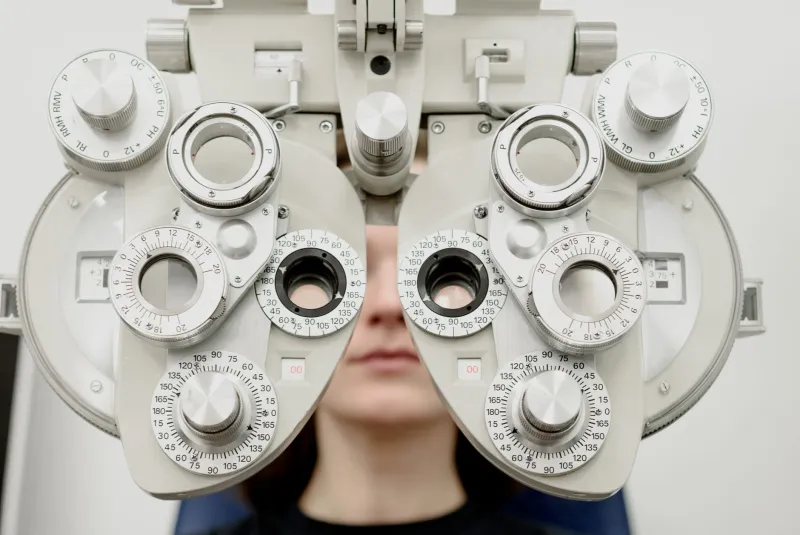
For millions of Americans, the annual eye exam follows a familiar script. You sit in the darkened exam room, peer through the phoropter, and respond to the classic question: "Which is clearer — lens one, or lens two?" A few minutes later, your optometrist announces that your prescription has changed again — slightly stronger, once more — and you leave with a new slip of paper destined for the eyewear counter.
Few patients pause to ask whether that change was truly necessary. Fewer still think to request a second opinion. Yet a quiet but serious conversation is underway among vision health professionals about a pattern some call "prescription creep" — the steady, year-over-year escalation of corrective lens power that may not always reflect genuine physiological change.
What Prescription Creep Actually Means
Prescription creep refers to the gradual, incremental strengthening of a patient's eyeglass or contact lens prescription over successive exams — sometimes by small fractions that individually seem inconsequential but accumulate meaningfully over years. The concern is not that all prescription increases are unwarranted. Myopia, for instance, is a progressive refractive error in which the eyeball elongates over time, genuinely requiring updated correction. Presbyopia — the age-related stiffening of the eye's crystalline lens — is another well-documented, biologically real phenomenon.
The controversy arises when prescription adjustments are made in response to subjective testing methods, patient preference, or commercial incentives rather than objective measurements of visual deterioration. Subjective refraction — the "one or two" process — is inherently influenced by patient responses that can vary based on fatigue, lighting conditions, or even the patient's desire to see sharper than their eyes can naturally sustain.
"The refraction process is a collaboration between patient and clinician," explains one optometrist who has practiced for over two decades in the Midwest. "When patients say they want the sharpest possible image, there is a tendency to push the prescription further than may be strictly necessary for comfortable, functional vision."
The Science Behind Why Prescriptions Change
To evaluate whether a prescription change is legitimate, it helps to understand the underlying biology.
Myopia progression is driven by axial elongation of the eye — a physical change that can be measured objectively. In children and young adults, this process is often ongoing and well-documented. However, myopia typically stabilizes in the mid-to-late twenties for most patients. Adults who continue receiving stronger myopia prescriptions year after year after stabilization should consider whether those changes reflect genuine axial growth or subjective over-correction.
Presbyopia begins affecting most Americans in their early-to-mid forties and progresses through the mid-fifties, after which the accommodative system is largely exhausted. During this window, reading glasses or progressive lens additions genuinely do require periodic updating. But the rate of change is not uniform, and prescriptions should not be adjusted simply because a year has passed.
Hyperopia (farsightedness) and astigmatism can also fluctuate, sometimes stabilizing for long periods. Patients with these conditions who receive annual prescription updates should ask their eye care provider to explain the objective basis for any change.
When a New Prescription Is Genuinely Warranted
Not every prescription increase deserves skepticism. There are clear, evidence-based scenarios in which updated correction is medically appropriate:
- Documented axial length increase in younger patients with progressive myopia, confirmed through objective measurement tools such as optical biometry.
- Symptomatic functional decline — when a patient is experiencing headaches, eye strain, or difficulty with tasks like driving or reading that can be directly attributed to an inadequate prescription.
- New pathology affecting the lens or cornea, such as early cataracts or corneal irregularities, which can alter refractive status.
- Significant prescription gaps — changes of 0.50 diopters or more in sphere or cylinder power, which most clinicians consider clinically meaningful.
By contrast, changes of 0.25 diopters or less — particularly when a patient reports no functional complaints — fall into a gray zone that warrants a candid conversation rather than an automatic update.
The Role of Commercial Incentives in Eye Care
It would be incomplete to discuss prescription creep without acknowledging the structural realities of modern optometric practice in the United States. Many optometrists operate within retail optical environments where the exam and the eyewear purchase occur under the same roof. While the vast majority of eye care professionals maintain rigorous ethical standards, the architecture of these settings can create subtle pressures.
Patients should be aware that they have a legal right under the Federal Trade Commission's Eyeglass Rule to receive a copy of their prescription at the conclusion of their exam — at no additional charge — and to fill that prescription wherever they choose. This rule exists precisely to ensure that patients are not financially captive to the practice that examined them.
Some advocates for patient autonomy in eye care suggest that seeking a second opinion from an independent optometrist or an ophthalmologist — particularly when prescriptions change significantly or frequently — is a reasonable and responsible choice, not an act of distrust.
Questions Worth Asking at Your Next Exam
Becoming a more informed eye care patient does not require medical training. It requires only a willingness to engage your provider in an honest dialogue. Consider asking the following:
- "How much has my prescription changed, and is that change clinically significant?" A 0.25-diopter change in one eye is very different from a 1.00-diopter change in both.
- "What objective measurements support this change?" Autorefraction, corneal topography, and biometry provide data points that go beyond the subjective refraction process.
- "Would my functional vision be meaningfully affected if I kept my current prescription for another year?" This question can reveal whether an update is driven by necessity or habit.
- "Are there any non-prescription interventions I should consider?" For myopia management in younger patients, options such as orthokeratology or low-dose atropine therapy may reduce the rate of progression.
When to Seek a Second Opinion
Seeking an additional evaluation is appropriate in several circumstances: when your prescription changes substantially in a short period without a clear explanation; when you are experiencing symptoms that your current prescription does not resolve; when you are being advised to make a significant financial investment in new eyewear based on a small prescription change; or simply when you feel uncertain about a clinical recommendation.
Ophthalmologists — physicians with full medical training in eye disease — can provide an independent assessment and may order additional diagnostic testing that goes beyond what a standard optometric exam includes. For complex cases involving rapid myopia progression, unexplained visual changes, or suspected pathology, a referral to an ophthalmologist is entirely appropriate to request.
The Bigger Picture
Prescription changes are not inherently suspicious. Eyes do change, and corrective lenses genuinely improve quality of life for hundreds of millions of Americans. The goal of asking harder questions is not to undermine trust in eye care professionals — the vast majority of whom are dedicated, ethical practitioners — but to ensure that patients participate actively in decisions about their own vision health.
Clear vision is not simply a function of the strongest possible lens. It is the result of a prescription that accurately reflects your eyes' current needs, supported by an honest, evidence-based conversation between you and your provider. If that conversation is not happening at your annual exam, it may be time to open it yourself.