Lighting That Hurts: How the Spaces You Live and Work In Are Quietly Wearing Out Your Eyes
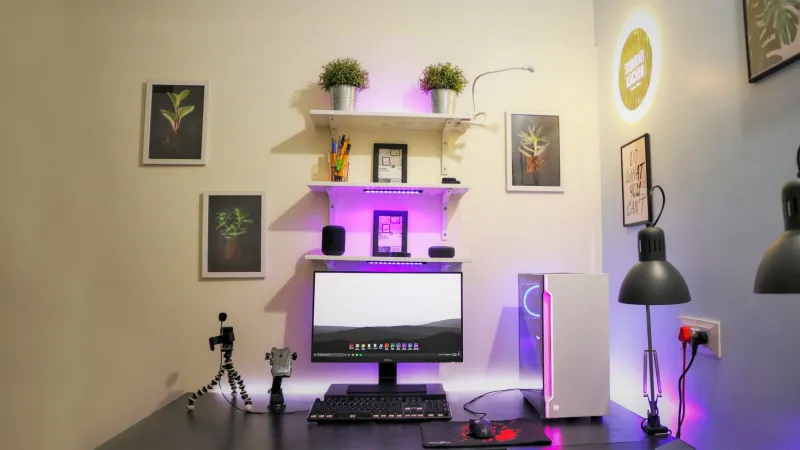
Light is so fundamental to vision that it is easy to take for granted. Most Americans give far more thought to the paint color on their walls than to the quality of the light illuminating them. Yet the relationship between lighting and eye health is both direct and consequential. Poor lighting does not damage the eyes in the way that UV radiation does, but it imposes a sustained physical burden — one that accumulates over the course of a workday, a season, and a lifetime of habits.
The good news is that lighting is one of the most correctable environmental risk factors for eye strain. Unlike screen time habits, which require behavioral discipline, or outdoor allergens, which require avoidance strategies, lighting can often be improved with a few targeted changes that cost far less than a new pair of glasses.
The Physiology of Lighting and Eye Strain
To understand why lighting matters, it helps to understand what the eyes are doing in response to it. The pupil constantly adjusts its diameter to regulate the amount of light reaching the retina. The ciliary muscle, which controls the lens's focus, contracts and relaxes as gaze shifts between distances and as light levels change. When lighting conditions are inconsistent — too dim in some areas, excessively bright in others, or flickering imperceptibly — these muscles work harder and more erratically than they need to.
The result is a cluster of symptoms collectively called asthenopia, or eye strain: aching eyes, difficulty maintaining focus, increased sensitivity to light, blurred vision after prolonged near work, and headaches that tend to worsen over the course of the day. None of these symptoms indicate permanent damage, but they are meaningful signals that your visual environment is creating unnecessary physiological demand.
The Problem With Contrast and Glare
One of the most common and least recognized lighting errors is extreme contrast between a bright screen or task area and a dark surrounding environment. When you watch television in a completely darkened room, or use a laptop on a bright white background against a dimly lit wall, your eyes must constantly adapt as your gaze moves between areas of very different luminance. This adaptation is metabolically costly and fatiguing over time.
Glare presents a related but distinct problem. Direct glare — light shining directly into the eyes from an overhead fixture or window — causes the pupil to constrict in an attempt to protect the retina, which simultaneously reduces the clarity of the visual task you are trying to perform. Reflected glare, which bounces off glossy surfaces such as monitors, countertops, or laminated documents, has the same effect with the added frustration of being harder to identify as the source of discomfort.
Room-by-Room Evaluation
The Home Office
The home office has become, for many Americans, the space where lighting problems cause the most harm — simply because it is where sustained near-vision tasks are concentrated for the longest durations.
The first priority is monitor positioning relative to windows. Placing a monitor directly in front of a window creates a silhouette effect that strains the eyes; placing it directly in front of a window behind the monitor creates glare on the screen. The optimal position is perpendicular to windows, with window light coming from the side. Adjustable blinds or sheer curtains allow daylight to be moderated rather than blocked entirely.
Overhead lighting in home offices should provide ambient illumination that reduces contrast between the screen and the surrounding environment without shining directly onto the monitor. A desk lamp with a warm-to-neutral color temperature (approximately 3,000 to 4,000 Kelvin) directed at documents or a keyboard — rather than at the face — reduces the pupil's need to constantly adapt.
Anti-glare screen filters are a modest investment that can meaningfully reduce reflected glare on monitors, particularly in rooms where lighting conditions cannot be fully controlled.
The Bedroom
The bedroom presents a different set of concerns, centered less on task lighting and more on the relationship between light and the circadian system. The human body's sleep-wake cycle is regulated in part by light exposure, with short-wavelength (blue-spectrum) light in the evening suppressing melatonin production and delaying sleep onset.
For eye health specifically, the concern in the bedroom is the combination of low ambient light and high-contrast screen use that has become the default nighttime routine for most Americans. Reading on a bright screen in a dark room is one of the most demanding scenarios for the eyes' adaptive systems.
Practical improvements include using warm-spectrum bulbs (2,700 Kelvin or lower) for bedside lamps, enabling night mode settings on devices used after sunset, and ensuring that reading lamps provide sufficient ambient fill light to reduce the contrast between the page or screen and the surrounding room.
The Kitchen
Kitchens are frequently over-lit in some areas and under-lit in others. Recessed ceiling fixtures provide general illumination but often leave countertops — where food preparation and recipe reading actually occur — in relative shadow. The result is that people lean closer to their work, increase visual effort, and experience neck and eye fatigue that they rarely attribute to the lighting.
Under-cabinet LED strip lighting is an inexpensive and widely available solution that directs task illumination precisely where it is needed. Choosing a color temperature in the 3,000 to 4,000 Kelvin range provides clarity without the harsh, clinical quality of very cool (5,000+ Kelvin) lighting.
Reading Nooks and Living Areas
For sustained reading, the ideal light source is positioned over the shoulder to illuminate the page without creating shadows or reflecting back toward the eyes. A lamp with a minimum of 450 lumens for reading tasks is generally sufficient for most adults; those over 50 may benefit from higher output, as the aging lens transmits less light to the retina.
Living areas used for television viewing benefit from bias lighting — a low-level light source placed behind the television that reduces the luminance contrast between the bright screen and the dark wall behind it. This is a technique borrowed from professional video editing environments, and its application in home settings is straightforward and inexpensive.
Circadian Lighting: The Broader Picture
Beyond immediate comfort, the timing and spectrum of light exposure throughout the day has implications for overall health that extend well beyond the eyes. Morning exposure to bright, cool-spectrum light helps anchor the circadian rhythm, supporting alertness, mood regulation, and sleep quality. Evening exposure to warm, low-intensity light preserves melatonin production and supports restorative sleep.
This does not require expensive smart-lighting systems, though those are available for those who want them. Simply using brighter, cooler bulbs in spaces used during the day and warmer, dimmer bulbs in spaces used in the evening is a low-cost strategy that aligns with what the body's photoreceptor system expects.
A Practical Starting Point
If you are uncertain where to begin, start by spending one full workday paying deliberate attention to moments of visual discomfort. Note the time of day, the task, and the lighting conditions. In most cases, a pattern will emerge — and the solution will be more straightforward than you might expect.
Your eyes spend every waking hour working within the environment you have created for them. Giving that environment a fraction of the attention you give your screen settings or your desk chair is an investment that pays returns in comfort, focus, and long-term ocular health.