When the Brain Takes a Hit, the Eyes Pay the Price: Understanding Post-Concussion Vision Syndrome
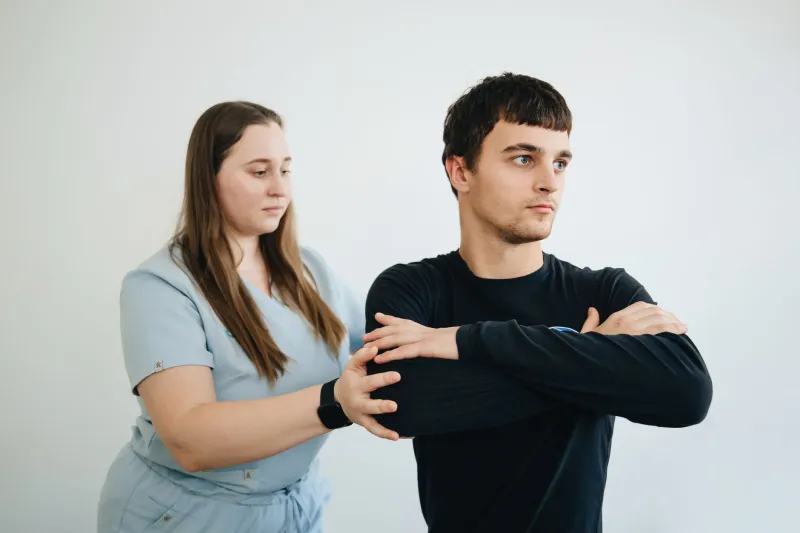
For most people, a concussion fits a familiar narrative: a collision, a fall, a few days of headaches and rest, and then a gradual return to normal. What that narrative rarely includes is the chapter that sometimes begins weeks later — the one where reading becomes exhausting, fluorescent lights feel unbearable, and walking down a grocery store aisle produces an unsettling sense of visual chaos.
This is the reality for a significant portion of the estimated 3.8 million Americans who sustain concussions each year, according to data from the CDC. For these individuals, the injury does not end when the headache fades. Instead, it quietly reshapes the way their visual system functions — and in many cases, neither the patient nor their physician connects the dots.
Why the Eyes Are So Vulnerable After a Brain Injury
The connection between brain trauma and visual disruption is rooted in basic neuroanatomy. Roughly half of the brain's neural pathways are involved in some aspect of visual processing. These pathways govern not only what the eyes see, but how they move together, how they focus at varying distances, how they respond to light, and how the brain interprets spatial information.
When a traumatic brain injury — even a mild one classified as a concussion — occurs, the mechanical forces involved can stretch or disrupt these delicate neural networks. The result is not necessarily damage to the eyes themselves. The structures within the eye often remain entirely intact. Rather, the disruption occurs in the communication channels between the eyes and the brain, producing a category of dysfunction that clinicians increasingly refer to as post-concussion vision syndrome.
Because these pathways are so diffuse and interconnected, the symptoms they produce can be remarkably varied and, at first glance, easy to attribute to other causes.
Symptoms That Are Easy to Overlook — or Misattribute
One of the central reasons post-concussion vision syndrome goes underdiagnosed is that its symptoms do not always look like vision problems. Patients frequently report them as cognitive difficulties, anxiety, or general fatigue — descriptions that can lead providers down entirely different diagnostic paths.
Common presentations include:
Convergence insufficiency. The eyes struggle to work together when focusing on nearby objects, causing words to blur or double on a page. Reading becomes laborious, and comprehension suffers — symptoms that are often mistaken for attention difficulties or learning disorders.
Accommodative dysfunction. The eye's focusing mechanism loses its flexibility, making it difficult to shift visual attention between near and far distances. Students returning to school and workers returning to the office frequently encounter this problem without recognizing its origin.
Photophobia. An intensified sensitivity to light — whether from screens, overhead lighting, or sunlight — can make ordinary environments feel genuinely distressing. This symptom is frequently dismissed as a lingering headache complaint rather than a discrete visual finding.
Oculomotor dysfunction. The smooth, coordinated tracking movements the eyes make when reading a line of text or following a moving object become irregular. Patients may find themselves losing their place repeatedly while reading or experiencing dizziness when watching traffic pass.
Visual midline shift. A subtler but profoundly disorienting symptom in which the brain's perception of the body's center point in space becomes skewed, contributing to balance difficulties and a persistent sense of unsteadiness.
The timing of these symptoms adds another layer of complexity. They may not emerge immediately following the injury. In some cases, the visual system compensates adequately in the short term, only to decompensate once the patient resumes demanding visual tasks — returning to a screen-heavy workplace, resuming athletic training, or simply trying to keep pace with a busy daily routine.
The Diagnostic Gap and Why It Persists
A standard eye examination is not designed to detect post-concussion vision syndrome. A routine refraction will confirm whether a patient needs corrective lenses for distance or near vision, but it will not assess how the two eyes coordinate under dynamic conditions, how efficiently the visual system sustains focus during prolonged near work, or how the brain processes complex visual environments.
Detecting these dysfunctions requires a neuro-optometric evaluation — a specialized assessment performed by an optometrist with training in vision rehabilitation and acquired brain injury. These evaluations include testing of binocular function, accommodative range and facility, ocular motility, and visual perceptual processing.
Unfortunately, access to this level of care is uneven across the United States. Many primary care physicians and even neurologists managing post-concussion patients are not consistently referring to neuro-optometrists, and patients themselves rarely think to bring their visual complaints to an eye care professional when they believe their primary diagnosis is neurological.
The result is that a meaningful number of patients spend months — sometimes years — cycling through treatments for headaches, anxiety, or cognitive difficulties without anyone identifying the visual component driving many of their symptoms.
Vision Therapy: The Rehabilitative Path Forward
For patients who do receive an accurate diagnosis, the outlook is considerably more encouraging than many expect. Vision therapy — a structured program of exercises and activities designed to retrain the visual system — has demonstrated meaningful effectiveness in addressing the specific dysfunctions associated with post-concussion vision syndrome.
Therapy programs are individualized based on the patient's specific deficits and typically involve a combination of in-office sessions with a trained vision therapist and prescribed home exercises. Techniques may include prism lenses, specialized filters, computerized tracking exercises, and balance-integrated activities that help the brain recalibrate its spatial processing.
The process is not instantaneous. Meaningful improvement generally requires a commitment of several months, and progress can feel slow to patients who are eager to return to full function. However, clinical outcomes research — including studies published in peer-reviewed journals such as Optometry and Vision Science — supports vision therapy as a legitimate and evidence-informed component of post-concussion rehabilitation.
Athletes recovering from sports-related concussions represent a particularly well-documented population in this research, in part because their visual demands are measurable and their baseline performance is often tracked. Many have credited neuro-optometric rehabilitation with restoring not only their comfort in everyday environments but the precise visual-motor integration their sports require.
What Patients and Families Should Watch For
If you or someone you care for has sustained a head injury — whether through a motor vehicle accident, a sports collision, a workplace incident, or a fall — and is experiencing any of the following in the weeks or months afterward, a neuro-optometric evaluation is worth pursuing:
- Persistent difficulty reading or following text on a screen
- Double vision or blurred vision that fluctuates throughout the day
- Unusual sensitivity to bright light or digital screens
- Dizziness or nausea in visually stimulating environments such as stores or busy streets
- Difficulty with balance that has not responded to standard physical therapy
- Fatigue that worsens specifically during visual tasks
These symptoms deserve a direct conversation with an eye care professional, not merely reassurance that they will resolve on their own.
Opening a Clearer Path to Recovery
Post-concussion vision syndrome occupies an uncomfortable space between disciplines — too neurological for some eye care providers, too visual for many neurologists. That gap has real consequences for patients who deserve answers and effective treatment.
The encouraging truth is that the tools to identify and address these visual disruptions exist. What is needed is greater awareness — among patients, families, coaches, employers, and healthcare providers — that a head injury does not spare the visual system, and that the eyes' silent struggle after a concussion is neither imagined nor inevitable.
For those navigating this recovery, the path forward begins with asking the right questions and seeking out practitioners equipped to provide the right answers.