Why Your Eye Prescription Keeps Shifting — And What Your Eyes Are Really Trying to Tell You
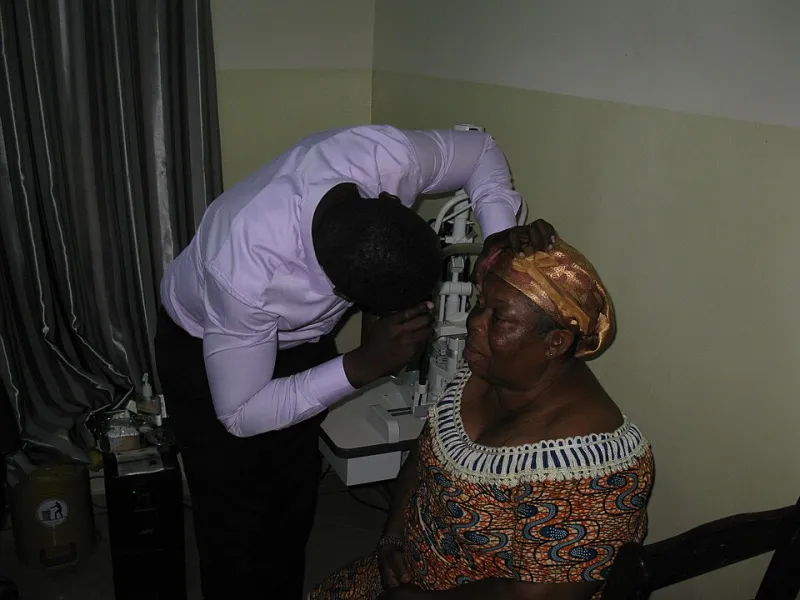
Photo: Gkbediako, CC BY-SA 4.0, via Wikimedia Commons
If you've ever picked up a new pair of glasses only to feel like they need updating within the year, you're not alone. Millions of Americans experience gradual — or sometimes sudden — changes in their vision prescription, and many assume it's simply the inevitable march of time. While aging does play a role, that explanation often tells only part of the story.
The truth is that a shifting prescription is frequently the body's way of signaling something else entirely. Identifying the underlying cause not only helps you see more clearly — it may also protect your broader health.
The Role of Age — And Its Limits as an Explanation
Age-related vision changes are real and well-documented. The most familiar of these is presbyopia, the gradual stiffening of the eye's natural lens that typically becomes noticeable in a person's early to mid-forties. This is why reading glasses become a fixture of middle age for so many people. Myopia — nearsightedness — also tends to progress through childhood and adolescence before stabilizing in the mid-twenties for most individuals.
However, prescription changes that occur rapidly, affect only one eye, or emerge outside these predictable windows deserve closer attention. When vision shifts in unexpected ways, the cause is frequently found outside the eye itself.
Blood Sugar and Your Vision: A Closer Link Than Most Realize
One of the most underappreciated triggers of prescription fluctuation is blood glucose instability. In individuals with diabetes — whether diagnosed or not — elevated blood sugar causes the lens of the eye to swell and change shape. This swelling alters the way light refracts through the eye, producing blurry or shifting vision that can mimic a simple prescription change.
For this reason, optometrists often caution patients with known diabetes against updating their glasses during periods of poor blood sugar control. The prescription recorded during a glucose spike may differ significantly from the one measured when levels are stable. If your vision seems to fluctuate throughout the day or correlates with how you've been eating, a conversation with your primary care physician — not just your eye doctor — is warranted.
Pre-diabetes, which affects an estimated 96 million American adults according to the Centers for Disease Control and Prevention, can produce the same effect before a formal diagnosis is ever made.
Medications That Quietly Alter Your Sight
A wide range of commonly prescribed medications can influence vision as a side effect, sometimes causing what appears to be a prescription change. Corticosteroids — used to treat everything from asthma to rheumatoid arthritis — are associated with accelerated cataract formation and increased intraocular pressure. Certain antihistamines, antidepressants, and even blood pressure medications can affect tear production or lens clarity in ways that shift how your eyes focus.
If you've recently started a new medication and noticed changes in your vision shortly afterward, inform both your prescribing physician and your eye care provider. Never discontinue a prescribed medication without medical guidance, but do advocate for yourself by flagging the correlation.
Digital Eye Strain and the Prescription Illusion
Extended screen use has introduced a phenomenon that frequently brings patients into the optometrist's office convinced they need a stronger prescription: digital eye strain, sometimes called computer vision syndrome. Hours of sustained near-focus work cause the ciliary muscles inside the eye to fatigue, temporarily reducing the eye's ability to shift focus efficiently. The resulting blurriness can feel permanent — but it often isn't.
In some cases, an optometrist may measure slightly different refractive values after prolonged screen exposure than they would following adequate rest. This doesn't necessarily mean the prescription has changed. It may mean the eye is temporarily fatigued. Scheduling eye exams in the morning, after a restful night, rather than at the end of a long workday, can yield more reliable measurements.
Hormonal Fluctuations and Vision Stability
Hormones exert a surprisingly significant influence on vision. Pregnancy, for instance, can temporarily alter corneal curvature and fluid balance in the eye, producing real but often reversible prescription changes. Many optometrists recommend that pregnant patients wait until several months postpartum before investing in new corrective lenses, since the prescription may revert once hormonal levels normalize.
Menopause is another transition that frequently corresponds with changes in both tear production and visual acuity. Thyroid disorders — both hyperthyroidism and hypothyroidism — can affect eye muscle function and orbital tissue, sometimes causing double vision or blurred sight that resolves once thyroid levels are brought under control.
When a Changing Prescription Signals Something Serious
Certain prescription changes should prompt prompt evaluation rather than a routine lens update. Sudden vision changes in one eye, new distortion or waviness in straight lines, or a rapid shift in prescription accompanied by eye pain or redness can indicate conditions such as keratoconus (a progressive thinning of the cornea), early glaucoma, or retinal pathology. These are not situations to wait out.
Keratoconus, in particular, often presents initially as a prescription that seems to change frequently and never quite stabilizes. If your optometrist notices irregular astigmatism or suspects corneal irregularity, they may recommend corneal topography — a detailed mapping of the cornea's surface — to rule out progressive conditions.
How to Work Toward Greater Prescription Stability
While not every prescription change can be prevented, several evidence-informed strategies may help slow the rate of fluctuation:
- Manage systemic health conditions proactively. Keeping blood pressure, blood sugar, and thyroid levels within healthy ranges directly supports more stable vision.
- Practice the 20-20-20 rule at work. Every 20 minutes of screen time, shift your gaze to something at least 20 feet away for 20 seconds. This reduces ciliary muscle fatigue.
- Schedule exams consistently. Annual comprehensive eye exams — not just vision screenings — allow your eye care provider to track trends over time and catch early signs of progressive conditions.
- Be transparent about medications. Bring a complete medication list, including supplements and over-the-counter products, to every eye appointment.
- Protect your eyes from UV exposure. Chronic ultraviolet exposure contributes to lens changes over time. Quality sunglasses with UV400 protection are a practical investment.
The Value of Asking Why, Not Just What
A changing prescription is not merely a logistical inconvenience requiring new lenses. It is information — a data point about what is happening inside your body. The most productive response is not simply to update your glasses and move on, but to ask your eye care provider what may be driving the change and whether further evaluation is appropriate.
At Opening Eye Care, we believe that clear vision begins with understanding. Your eyes are not isolated organs; they are windows into your overall health. When they signal change, it's worth listening carefully.