Bargain Frames, Borrowed Trouble: What Cheap Eyeglasses Are Really Doing to Your Eyes and Your Wallet
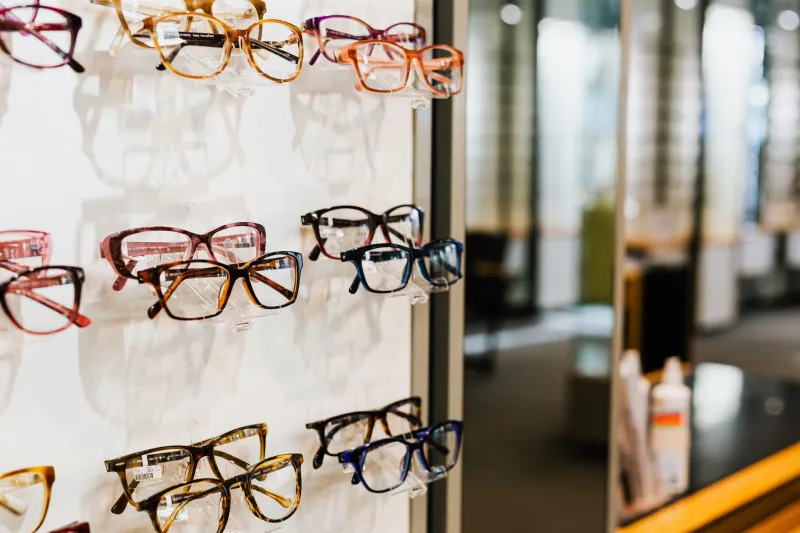
American consumers spend billions of dollars annually on eyewear, and in a market where a single pair of prescription glasses can easily exceed $400 at a traditional optical retailer, the appeal of a $39 online alternative is understandable. Budget-conscious shoppers have more purchasing options than ever — from discount optical chains to direct-to-consumer websites to the growing gray market of counterfeit designer frames. But as with most things in health care, the cheapest option at the point of purchase is not always the least expensive option over time.
The vision consequences of substandard eyewear are rarely dramatic or immediate. They tend to accumulate quietly — a persistent headache after long work sessions, eyes that feel inexplicably tired by mid-afternoon, a subtle but unshakeable sense that something in your vision simply isn't right. For many patients, those symptoms get attributed to screen fatigue or aging before anyone thinks to examine the glasses themselves.
What Actually Goes Into a Quality Lens
Not all prescription lenses are created equal, and the gap between a professionally manufactured lens and a budget alternative is wider than most consumers realize. A properly fabricated lens begins with accurate measurements: pupillary distance, optical center placement, base curve, and pantoscopic tilt all factor into whether a lens genuinely corrects your vision or merely approximates it.
Discount online retailers often rely on self-reported pupillary distance measurements, which are notoriously difficult to take accurately at home. Even a millimeter of misalignment in the optical center can introduce prismatic distortion — a phenomenon where the lens bends light incorrectly relative to your line of sight. For individuals with higher prescriptions or significant astigmatism, this misalignment translates directly into eye strain, blurred peripheral vision, and the kind of visual fatigue that compounds over hours of wear.
Beyond measurement accuracy, the quality of the lens material itself varies considerably. Polycarbonate lenses, high-index materials, and premium CR-39 plastic each have distinct optical properties. Budget manufacturers frequently use lower-grade materials that introduce subtle distortions, reduce contrast sensitivity, or fail to maintain consistent thickness across the lens surface — all of which degrade the clarity of the final product.
The Coating Problem Nobody Talks About
Lens coatings are where many budget glasses quietly fail their wearers. Anti-reflective coatings, scratch-resistant treatments, UV-blocking layers, and hydrophobic finishes are not cosmetic features — they are functional components that directly affect visual comfort and long-term ocular health.
A poorly applied anti-reflective coating can actually worsen glare rather than reduce it, creating interference patterns that increase visual noise and contribute to headaches during screen use. Scratch-resistant coatings on bargain lenses tend to delaminate or develop micro-crazing far sooner than their premium counterparts, and once a lens surface is compromised, the resulting scattering of light becomes a persistent source of visual discomfort.
Perhaps most concerning is the inconsistency in UV protection. The American Academy of Ophthalmology recommends lenses that block 99 to 100 percent of both UVA and UVB radiation. Many discount lenses carry UV-blocking claims without independent verification, and some counterfeit products have been tested and found to offer essentially no meaningful UV filtration — meaning wearers may actually be worse off than if they wore no glasses at all, since tinted lenses cause the pupil to dilate and admit more harmful radiation.
Counterfeit Designer Frames: A Separate Category of Risk
The counterfeit eyewear market deserves particular attention. Knockoff versions of luxury brands — convincingly stamped with familiar logos and sold through online marketplaces, street vendors, and informal retail channels — are rarely just an intellectual property concern. They represent a genuine optical health hazard.
Authentic designer frames from reputable manufacturers are engineered to precise optical tolerances. Frame geometry, temple length, nose pad placement, and bridge width all affect how a lens sits in front of the eye. Counterfeit frames are manufactured to look correct rather than to function correctly, and the dimensional tolerances are frequently poor enough to misposition lenses significantly. The result is a pair of glasses that may appear identical to the real thing while delivering meaningfully inferior optical performance.
Additionally, counterfeit frames often contain undisclosed materials — including certain nickel alloys and chemical plasticizers — that have been associated with contact dermatitis, skin sensitization, and in rare cases, more serious reactions. Regulatory agencies including the FDA have flagged imported counterfeit eyewear for failing to meet basic safety standards, yet enforcement in the online marketplace remains inconsistent.
How to Shop Affordably Without Compromising Your Vision
None of this is to suggest that affordable eyeglasses are inherently dangerous or that consumers must spend hundreds of dollars to obtain functional eyewear. There are legitimate budget options that deliver acceptable quality — but identifying them requires more scrutiny than most shoppers apply.
First, prioritize retailers or online providers that employ licensed opticians to review prescriptions and take optical measurements, either in person or through verified digital tools. Several reputable direct-to-consumer brands have invested in measurement technology that meaningfully reduces the error margin of self-reported data.
Second, ask specific questions about lens coatings. A retailer that cannot provide clear information about the UV-blocking standard of their lenses, or the origin of their anti-reflective treatment, should raise concern. Look for lenses that meet ANSI Z80.3 optical standards — a benchmark that legitimate manufacturers will cite openly.
Third, be skeptical of any frame sold at a price that seems implausible for the brand it claims to represent. The resale and counterfeit markets for luxury eyewear are substantial, and the platforms that host them are not reliably policed. If a frame that retails for $300 at an authorized dealer is available for $25 from an unverified seller, the explanation is almost never a legitimate discount.
Finally, treat your glasses as a medical device rather than a fashion accessory. Your lenses are correcting a physiological condition, and the precision with which they do so has direct implications for how your visual system functions over time. An annual eye examination with a licensed optometrist remains the foundation of responsible eye care, and that relationship is the appropriate context in which to discuss affordable options — not the comments section of a deal-hunting forum.
The Longer View on Optical Investment
Eye strain, chronic headaches, and accelerated visual fatigue are not trivial inconveniences. They affect workplace productivity, quality of sleep, and overall wellbeing. When those symptoms arise from glasses that were supposed to solve a vision problem, the cost — measured in lost comfort, reduced function, and the eventual need for a proper replacement pair — almost always exceeds whatever was saved at the point of purchase.
The optical industry in the United States is not without its own pricing problems, and the case for greater affordability in eye care is legitimate. But the answer to overpriced eyewear is not unverified eyewear. It is informed, skeptical, and patient-centered purchasing — the kind that starts with understanding what you are actually buying and why it matters to your eyes.