Before You Go Under the Laser: A Candid Guide to LASIK Candidacy, Risks, and Alternatives
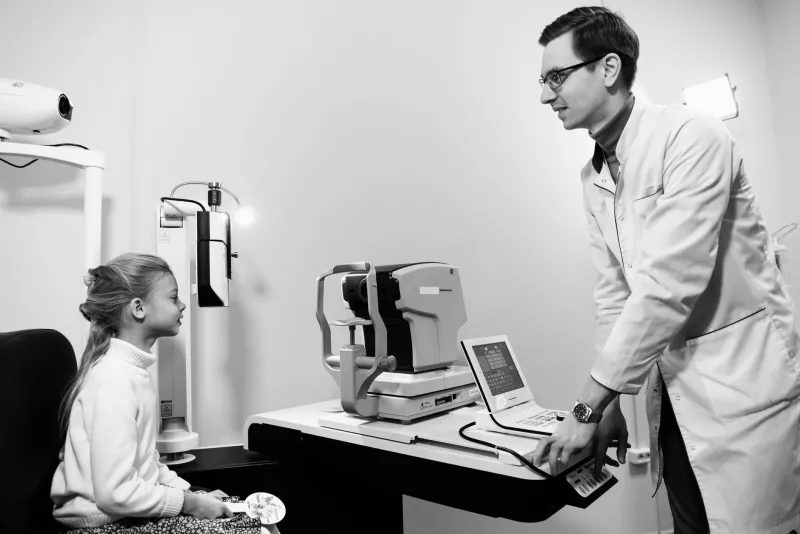
For millions of Americans, the appeal of LASIK surgery is understandable. The promise of waking up and seeing clearly without reaching for glasses or fumbling with contact lenses is a genuinely compelling one. The procedure has been performed more than 20 million times in the United States since its FDA approval in 1999, and satisfaction rates in clinical literature are frequently cited above 95 percent. Yet those statistics, while meaningful, do not tell the full story — particularly for the significant portion of patients who are turned away from LASIK centers each year, or for those who proceed and find the results fall short of their expectations.
Understanding what LASIK can and cannot do — and whether it is appropriate for your specific eyes — requires looking well beyond the polished brochures that line the waiting rooms of refractive surgery clinics.
What LASIK Actually Does
LASIK, which stands for laser-assisted in situ keratomileusis, is a refractive surgery that corrects vision by reshaping the cornea — the clear, dome-shaped tissue at the front of the eye. During the procedure, a surgeon creates a thin flap in the corneal surface, lifts it, and uses an excimer laser to remove microscopic amounts of tissue, thereby altering how light bends as it enters the eye. The flap is then repositioned and heals without sutures.
The procedure addresses myopia (nearsightedness), hyperopia (farsightedness), and astigmatism by modifying the cornea's curvature. What it does not do is halt the natural aging of the eye's lens — which means that patients who have LASIK in their thirties or forties will still develop presbyopia, the age-related loss of near focusing ability, typically in their mid-forties. Many patients who achieve excellent distance vision after LASIK are surprised to find themselves reaching for reading glasses within a decade.
The Candidacy Question: Why Not Everyone Qualifies
Perhaps the most important thing to understand about LASIK is that it is not universally appropriate. Reputable ophthalmologists and refractive surgeons conduct comprehensive pre-operative evaluations precisely because certain anatomical and health factors can significantly increase the risk of complications or reduce the likelihood of a satisfying outcome.
Corneal thickness is one of the primary limiting factors. Because LASIK requires the removal of corneal tissue, patients with thin corneas may not have enough structural integrity to safely undergo the procedure. Removing too much tissue can compromise the cornea's biomechanical stability, potentially leading to a progressive and serious condition called ectasia — a bulging and thinning of the cornea that can cause significant, sometimes irreversible vision distortion.
Refractive stability is another critical criterion. Surgeons generally require that a patient's prescription has remained stable for at least one to two years before proceeding. Younger patients — particularly those still in their late teens or early twenties — may not yet have a prescription that has plateaued, making them poor candidates for a permanent procedure.
Pupil size in low-light conditions has been a subject of ongoing discussion in refractive surgery literature. Patients with large pupils may be at greater risk for post-surgical halos, glare, and starbursts, particularly when driving at night. Modern laser systems have addressed this to some degree, but it remains a factor worth discussing with your surgeon.
Dry eye disease is among the most common reasons patients are counseled against LASIK. The procedure severs corneal nerves during flap creation, which can reduce tear production and exacerbate existing dry eye symptoms — sometimes significantly and for extended periods. Patients with a pre-existing dry eye diagnosis should approach LASIK with particular caution and explore alternatives.
Additionally, certain systemic conditions — including autoimmune disorders, uncontrolled diabetes, and keratoconus (a progressive corneal thinning condition) — are generally considered contraindications.
Understanding the Risk Profile
While LASIK is considered safe when performed on appropriate candidates, the phrase "safe" should not be interpreted as "without risk." The FDA has acknowledged that some patients experience persistent side effects that affect their quality of life, and in 2018 the agency updated its patient labeling requirements to better communicate these possibilities.
Potential complications include dry eye symptoms that may persist for months or, in some cases, years; visual disturbances such as halos, glare, and starbursts around lights; under-correction or over-correction requiring enhancement procedures or continued use of corrective lenses; and, in rare cases, flap complications or infection. Regression — a gradual return of the refractive error over time — can also occur, particularly in patients with higher prescriptions.
None of this is meant to alarm prospective patients unnecessarily. It is meant to underscore that an honest conversation with a qualified ophthalmologist, not a high-pressure sales consultation at a discount laser center, is the appropriate starting point.
Questions Worth Asking Before You Commit
If you are considering LASIK, the quality of your pre-operative evaluation matters enormously. Before agreeing to surgery, consider asking your surgeon the following:
- What specific measurements of my corneal thickness and topography were taken, and what do they show?
- Am I at any elevated risk for ectasia based on my corneal profile?
- What is a realistic outcome range for my prescription level?
- How is dry eye disease currently presenting in my eyes, and how might surgery affect it?
- What are the chances I will still need glasses for some tasks after surgery?
- What enhancement policy does your practice have if I am under- or over-corrected?
A surgeon who welcomes these questions and provides thorough, unhurried answers is a meaningful indicator of a reputable practice.
Alternatives That Deserve Equal Consideration
For patients who do not qualify for LASIK — or who are simply not comfortable with the procedure's risk profile — several alternatives are worth exploring with an eye care professional.
PRK (photorefractive keratectomy) predates LASIK and does not involve creating a corneal flap, making it a viable option for patients with thin corneas or those in professions where a flap could pose a risk (certain military or contact sports contexts). Recovery is slower and somewhat more uncomfortable, but long-term outcomes are comparable to LASIK for many patients.
LASEK and SMILE are newer surface-based and flapless techniques that offer their own distinct profiles in terms of recovery, dry eye risk, and suitability for various prescriptions. SMILE, in particular, has gained traction as a potentially gentler option for patients concerned about dry eye.
Implantable Collamer Lenses (ICL) are a compelling option for patients whose prescriptions fall outside the range that laser surgery can safely address. Rather than reshaping the cornea, ICL surgery involves implanting a soft lens behind the iris. Because no corneal tissue is removed, this option preserves the cornea's structure entirely and is reversible — a meaningful distinction from laser procedures.
Orthokeratology (Ortho-K) involves wearing specially designed rigid contact lenses overnight to temporarily reshape the cornea, providing clear daytime vision without surgery. While not a permanent solution, it suits patients who prefer a non-surgical approach or who are not yet stable enough for a permanent procedure.
Making a Decision Grounded in Your Own Eye Health
The decision to pursue refractive surgery is deeply personal and should be driven by an accurate understanding of your individual anatomy, lifestyle, and long-term vision goals — not by promotional pricing or a friend's glowing testimonial. What produces a transformative outcome for one patient may be entirely inappropriate for another.
Begin with a comprehensive evaluation from a board-certified ophthalmologist who performs thorough corneal mapping and takes the time to discuss your complete medical history. If a practice discourages questions or rushes you toward a decision, that itself is informative.
Clear vision is a worthy goal. Achieving it wisely — with full knowledge of your options, your candidacy, and the realistic range of outcomes — is how you protect not just your sight, but your long-term eye health.