Why Your Eyes Reject Some Contact Lenses — And How to Find the Material That Actually Works for You
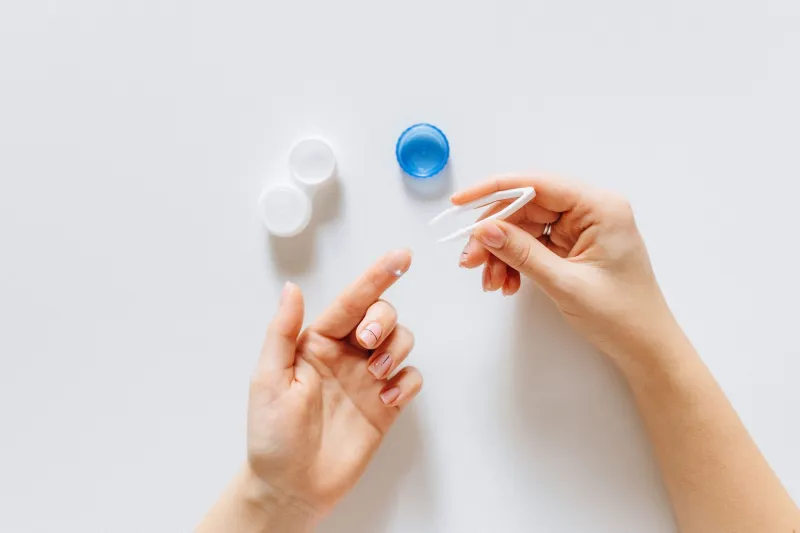
For millions of Americans who rely on contact lenses to get through the day, comfort is not a luxury — it is a prerequisite. Yet a surprisingly large number of wearers experience persistent irritation, dryness, or the unsettling sensation that a foreign object has taken up residence on their cornea. If that describes your experience, the problem may not be your technique or your care routine. It may simply be the material.
Contact lens technology has advanced considerably over the past two decades, but the marketplace can still feel overwhelming. Understanding what separates one lens type from another — and why your individual eye chemistry plays such a decisive role — can transform a frustrating trial-and-error process into a more informed conversation with your optometrist.
The Three Primary Material Families
Contact lenses broadly fall into three categories, each with distinct physical properties that affect how they interact with the ocular surface.
Traditional hydrogel lenses were the dominant option for decades and remain widely prescribed today. Made from water-absorbing polymers, these lenses rely on their water content to transmit oxygen to the cornea. The logic sounds reasonable — a wetter lens should feel more comfortable — but the reality is more complicated. As the day progresses, hydrogel lenses tend to draw moisture from the tear film itself to maintain their water content, which can leave eyes feeling progressively drier as evening approaches.
Silicone hydrogel lenses emerged in the late 1990s as a significant advancement. By incorporating silicone into the polymer structure, manufacturers created a material that transmits oxygen far more efficiently — not through water, but directly through the silicone matrix. This means the lens does not need to stay as wet to keep the cornea oxygenated. For many wearers, silicone hydrogel lenses offer noticeably better end-of-day comfort and are associated with lower rates of certain complications related to corneal oxygen deprivation.
Rigid gas-permeable (RGP) lenses, sometimes called GP lenses, are made from firm, durable materials that allow high levels of oxygen transmission. They do not drape over the cornea the way soft lenses do — instead, they float on a thin layer of tears. This makes them particularly effective for people with irregular corneal surfaces, such as those with keratoconus or high astigmatism. The adjustment period can be longer, but many wearers report that once acclimated, RGP lenses offer superior optical clarity and durability compared to soft options.
The Role of Oxygen Permeability
The cornea is the only tissue in the human body that must obtain its oxygen directly from the atmosphere rather than from blood vessels. When a lens sits on the cornea, it acts as a partial barrier. A lens with low oxygen permeability — measured scientifically as Dk/t — can gradually deprive the corneal cells of what they need, triggering a cascade of responses including redness, discomfort, and over time, the growth of new blood vessels into the cornea (a condition called corneal neovascularization).
This is why oxygen permeability is not simply a marketing figure. For wearers who keep their lenses in for extended hours or those who have historically experienced redness and late-day fatigue, selecting a lens with a higher Dk/t value is a clinically meaningful decision — not an upsell.
Your Tear Film: The Variable Nobody Talks About Enough
Perhaps the most underappreciated factor in contact lens comfort is the individual tear film. The tear film is a complex, layered structure composed of water, oils, and proteins, and it varies meaningfully from person to person. Some individuals produce tears with higher protein concentrations, which can lead to rapid protein deposition on lens surfaces — a process that creates a film of biological debris that blurs vision and causes irritation.
Silicone hydrogel lenses, despite their oxygen advantages, have a surface chemistry that can attract lipid deposits more readily than some traditional hydrogel lenses. For wearers with oily tear films, this can paradoxically make silicone hydrogel lenses feel less comfortable despite their technical superiority in other respects. Manufacturers have addressed this through surface treatments and coatings, but no single solution works universally.
Additionally, individuals with dry eye disease — estimated to affect tens of millions of Americans — face a particular challenge. Their tear film is either insufficient in volume or unstable in composition, meaning the lens surface desiccates more quickly. For these patients, daily disposable lenses often represent the most practical solution, as they eliminate the buildup that accumulates on lenses worn over multiple days.
Why Replacement Schedule Matters More Than Most People Realize
A lens worn for a single day has had no time to accumulate the protein, lipid, and microbial deposits that build up on extended-wear lenses. Daily disposables consistently rank among the most comfortable options for wearers with sensitive eyes, allergy-prone tear films, or dry eye tendencies — not because the material is inherently superior, but because freshness itself is a form of comfort.
Biweekly and monthly replacement schedules can work well for wearers whose tear chemistry does not promote rapid deposit accumulation, but they require diligent cleaning and storage practices. Cutting corners on lens hygiene — rinsing with tap water, topping off solution rather than replacing it, extending the replacement schedule — can quickly undo whatever comfort advantage the lens material provides.
Practical Strategies for Finding Your Ideal Lens
If you have cycled through multiple lens brands without finding one that feels genuinely comfortable, the following approach can help structure a more productive conversation with your optometrist.
Document your symptoms precisely. Note the time of day discomfort typically begins, whether it worsens in air-conditioned environments, and whether it presents as dryness, a scratchy sensation, or blurred vision. These details help narrow the likely cause.
Request a tear film assessment. A thorough evaluation of your tear film quality and quantity — not just a standard refraction — provides the clinical foundation for a more targeted lens recommendation. Tests such as tear breakup time measurement and meibomian gland evaluation can identify dry eye subtypes that respond differently to various lens materials.
Ask specifically about trial lenses across material categories. Many practices stock trial lenses from multiple manufacturers. Wearing a daily disposable hydrogel on one day and a silicone hydrogel on another — under comparable conditions — can generate useful subjective data.
Consider the full system. The lens solution you use matters. Certain multipurpose solutions interact poorly with specific lens materials, a phenomenon sometimes called solution-induced corneal staining. Your eye care provider can recommend pairings that have been tested for compatibility.
When Soft Lenses Simply Are Not the Answer
For a subset of patients — particularly those with keratoconus, post-surgical corneas, or significant irregular astigmatism — the most comfortable and optically effective option may be a rigid gas-permeable lens or a specialty design such as a scleral lens. Scleral lenses vault over the entire corneal surface and rest on the less sensitive sclera, effectively replacing the irregular tear film with a smooth, stable fluid reservoir. For patients who have struggled with every soft lens on the market, scleral lenses can represent a transformative solution.
The key takeaway is that contact lens comfort is not a fixed outcome determined by how sensitive your eyes happen to be. It is a variable that responds meaningfully to material selection, replacement schedule, tear film management, and clinical guidance. Opening a genuine dialogue with your optometrist — armed with specific observations about when and how discomfort occurs — is the most reliable path toward finding a lens that truly works for your eyes.