Prescription Sunglasses, Transition Lenses, or Polarized Overglasses: A Clear-Eyed Comparison for Every Lifestyle
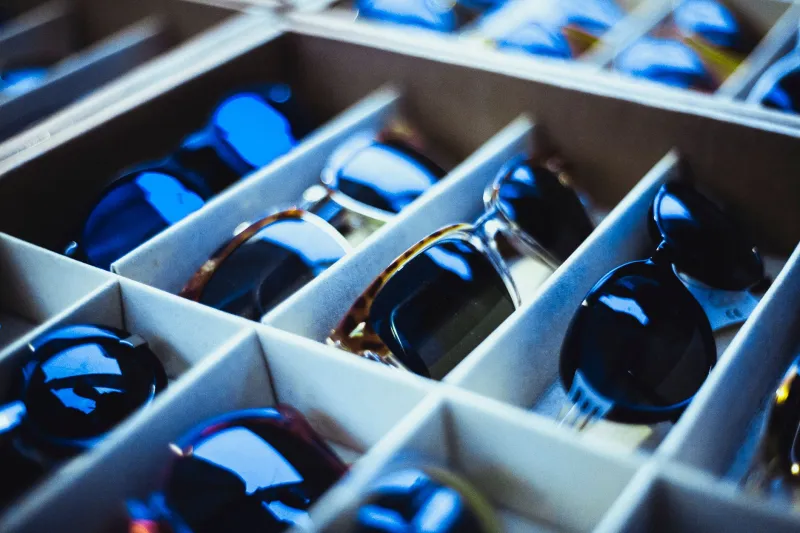
Anyone who wears prescription eyeglasses has faced the same recurring dilemma on a bright afternoon: squint through your regular glasses, carry a separate pair of prescription sunglasses, or fumble with an awkward clip-on that never quite fits. The eyewear industry has responded with an expanding range of solutions, each promising to resolve the problem once and for all.
The reality is more nuanced. Prescription sunglasses, photochromic (commonly known as transition) lenses, and polarized overglasses each represent a genuinely different approach to the same challenge—and each performs better or worse depending on where, when, and how you use them. Understanding those distinctions before making a purchase can save you both money and frustration.
What You Are Actually Protecting Against
Before comparing products, it is worth establishing what adequate sun protection for the eyes actually requires. Ultraviolet radiation—specifically UV-A and UV-B wavelengths—poses the most significant long-term risk, having been linked to the development of cataracts, macular degeneration, and pterygium (a growth on the eye's surface). All three options discussed here can provide full UV protection when properly specified, so UV blockage alone should not be the deciding factor.
The more relevant differentiator for many users is glare management. High-intensity visible light, particularly the horizontal glare reflected off water, roads, and snow, causes visual discomfort and reduces contrast sensitivity—making it harder to see clearly even when UV exposure is controlled. This is where polarization becomes significant, and where the three options diverge most meaningfully.
Prescription Sunglasses: The Gold Standard With Real Limitations
Dedicated prescription sunglasses remain the benchmark against which other solutions are measured. Because the tint, polarization, and lens material are all optimized at the time of fabrication, they offer the most consistent optical performance available. Lens color can be selected specifically for the activity—gray for neutral color rendering, brown or amber for enhanced contrast in variable light, copper or rose for certain sports applications.
For activities involving sustained outdoor exposure, prescription sunglasses are difficult to surpass. Anglers on the Gulf Coast who need polarized lenses to see through water surface glare, cyclists competing in road events, or golfers tracking ball flight against a bright sky will generally find that purpose-built prescription sunglasses outperform every alternative.
The limitation is equally straightforward: they are a second pair of glasses. That means a second case to carry, a second set of lenses to scratch or break, and a second purchase price to absorb. Quality prescription sunglasses with polarized lenses and premium anti-reflective coatings frequently run between $300 and $600 or more at retail, depending on the prescription complexity and frame selection. For patients with high prescriptions or progressive lenses, costs can climb higher still.
They also become useless the moment you step indoors, requiring an immediate switch back to your regular eyewear—a minor inconvenience in most settings, but a meaningful one in environments where lighting changes frequently, such as covered sports stadiums, partially shaded hiking trails, or restaurant patios.
Transition Lenses: Convenience With Caveats
Photochromic lenses, sold most widely under the Transitions brand name in the United States, darken automatically in response to UV radiation and return to a clear state indoors. The appeal is obvious: one pair of glasses handles all lighting conditions without requiring a swap. For patients who find managing multiple pairs of eyewear burdensome—a common concern among older adults, children, and anyone with an active lifestyle—this convenience is genuinely valuable.
Modern photochromic technology has improved considerably over earlier generations. Current formulations activate more quickly and achieve darker tints than their predecessors, and some specialty versions are designed to provide a modest tint even indoors under fluorescent lighting.
However, two limitations deserve clear disclosure. First, standard photochromic lenses activate in response to UV light—and most automotive windshields block the UV wavelengths that trigger the darkening reaction. This means that while driving on a bright day, transition lenses may remain substantially clear, providing little meaningful glare protection during one of the highest-risk visual tasks Americans perform. Newer versions using visible-light-activated technology address this partially, but the effect remains less pronounced than behind a windshield than in direct outdoor light.
Second, the transition speed varies with temperature. In cold weather—relevant throughout much of the northern United States from October through April—the lenses activate more slowly and may not achieve full darkness even in direct sunlight. In very warm conditions, they may not darken as deeply as desired.
From a cost perspective, photochromic lenses typically add $100 to $200 to the price of a standard prescription, making them less expensive than a second complete pair of prescription sunglasses while eliminating the need to carry two pairs.
Polarized Overglasses: The Underrated Practical Option
Polarized overglasses—frames designed to fit over existing prescription eyewear—occupy a different market position entirely. They are inexpensive (many quality options retail between $20 and $60), require no prescription, and can be used immediately without any additional optical fabrication. For patients who need occasional sun protection but do not want to invest in a second pair of prescription eyewear, they represent a pragmatic solution.
The polarization itself is functionally equivalent to what you would find in a purpose-built prescription sunglass lens. A quality polarized overglass will cut reflected glare from water and roads just as effectively as a dedicated pair, provided the fit is adequate and the lens quality is reasonable.
The trade-offs are primarily aesthetic and ergonomic. Overglasses add bulk and weight, and even well-designed models are visually conspicuous. For casual beach trips, fishing outings, or driving in bright conditions, this may be entirely acceptable. For professional settings, competitive sports, or situations where appearance matters, most users find them less suitable.
Fit consistency is also variable. Overglasses are designed to accommodate a range of frame sizes, which means they rarely achieve the precise optical alignment of a purpose-built pair. Users with larger frames or distinctive frame shapes may find the fit uncomfortable or optically imperfect.
Matching the Solution to the Scenario
Daily commuting and driving: Transition lenses with a visible-light-activated formulation offer the most seamless experience for urban commuters who move between indoor and outdoor environments repeatedly throughout the day. However, if significant highway driving in bright conditions is part of your routine, supplementing with a pair of polarized overglasses kept in the vehicle is a low-cost way to address the windshield limitation.
Beach, lake, and water activities: Prescription sunglasses with polarized lenses are the clear choice for extended water exposure. Polarization is essential for managing reflected glare off water surfaces, and the superior fit and optical quality of a dedicated pair matter more when visual demands are high.
Outdoor sports and recreation: For activities involving sustained sun exposure and physical movement—hiking, cycling, running, tennis—prescription sunglasses with wrap-style frames and sport-specific lens tints provide the best combination of protection, stability, and visual performance.
Occasional and casual use: If sun protection is needed only occasionally—weekend errands, a seasonal trip to the beach, watching outdoor events—polarized overglasses offer strong value. Spending $30 to $50 on a quality pair is difficult to argue against for infrequent use.
Patients managing multiple environments: For those who move frequently between indoor and outdoor settings—teachers who supervise outdoor recess, healthcare workers who step outside between appointments, parents at youth sporting events—photochromic lenses in everyday glasses paired with a dedicated pair of prescription sunglasses for planned outdoor activities represents the most versatile combination.
A Note on UV Certification
Regardless of which option you choose, verify that any eyewear you purchase carries a label indicating 100 percent UV-A and UV-B protection, or UV400 certification. In the United States, sunglasses are regulated as medical devices by the Food and Drug Administration, but labeling standards are not uniformly enforced across all retail channels. Purchasing from a licensed optical retailer or eyecare professional remains the most reliable way to ensure the protection claims on your eyewear are accurate.
Your eyes represent a long-term investment in your quality of life. Choosing the right protection for how you actually live—rather than simply the most convenient or the least expensive option—is a decision worth taking seriously.