Slowing Myopia in Children: What Specialty Lenses, Overnight Reshaping, and Eye Drops Can — and Cannot — Do
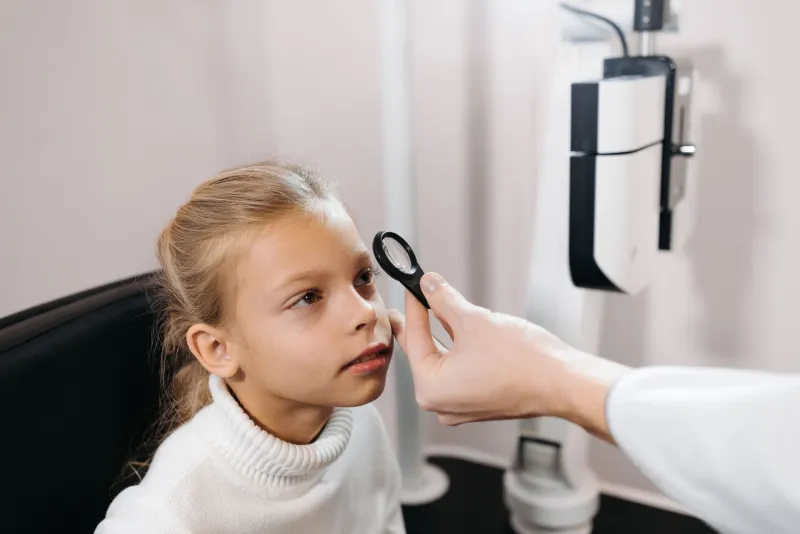
For decades, the standard response to a child's worsening nearsightedness was a stronger prescription each year and a reassurance that this was simply how things went. Glasses corrected the blur. The underlying condition — myopia, a progressive elongation of the eyeball — continued its course largely unchecked.
That picture has changed substantially. A body of clinical research now supports several interventions that appear to meaningfully slow myopia progression in children, reducing not just the inconvenience of stronger prescriptions but potentially the long-term health risks that accompany high myopia. For parents navigating this landscape, however, the information can feel overwhelming, the costs significant, and the marketing claims difficult to evaluate independently.
This guide aims to provide a grounded, evidence-informed overview of what is currently available, what the research supports, and what families should realistically expect.
Why Slowing Progression Matters Beyond Prescription Strength
Before examining the treatments themselves, it is worth understanding why myopia management has become a clinical priority rather than simply a cosmetic one.
Myopia occurs when the eye grows longer than its optical system requires, causing light to focus in front of the retina rather than on it. In mild cases, this is a manageable inconvenience corrected by lenses. But as the degree of myopia increases, so does the physical stretching of the retinal tissue — and with it, the risk of serious complications. High myopia (generally defined as -6.00 diopters or greater) is associated with elevated rates of retinal detachment, myopic macular degeneration, glaucoma, and early-onset cataracts.
This means that slowing progression during childhood — when the eye is still developing — is not merely about keeping a prescription manageable. It is about reducing a child's lifetime risk of vision-threatening disease.
Orthokeratology: Reshaping the Cornea Overnight
Orthokeratology, commonly called ortho-K, involves wearing specially designed rigid contact lenses during sleep. These lenses gently and temporarily reshape the cornea so that, upon waking and removing the lenses, the child can see clearly throughout the day without any corrective eyewear.
Beyond the convenience factor, ortho-K lenses appear to slow axial elongation — the physical lengthening of the eyeball that drives myopia progression. Multiple peer-reviewed studies, including several large randomized controlled trials, have demonstrated reductions in progression rates of approximately 40 to 60 percent compared to children wearing standard single-vision glasses.
The mechanism is not fully understood, but it is believed to relate to the peripheral defocus that ortho-K lenses create. Standard lenses correct central vision while leaving peripheral light to focus behind the retina — a signal that may actually stimulate further eye growth. Ortho-K lenses alter this peripheral focus pattern in ways that appear to reduce that growth stimulus.
Candidacy considerations are real. Children must be responsible enough to handle lens care and overnight wear. The corneal curvature and the degree of myopia must fall within appropriate ranges. Regular follow-up visits are essential. And parents should understand that the corneal reshaping effect is temporary — if lens wear is discontinued, the cornea returns to its original shape and the myopia becomes apparent again. Ortho-K does not cure myopia; it manages it.
Soft Multifocal and Myopia-Specific Contact Lenses
For families who prefer daytime wear or whose children are not ortho-K candidates, a category of soft contact lenses designed specifically for myopia management has emerged as a compelling alternative.
Products such as CooperVision's MiSight 1 day lens — the first soft contact lens approved by the U.S. Food and Drug Administration specifically for myopia control in children — use a concentric ring design that simultaneously corrects central vision and creates peripheral defocus intended to slow axial growth. Clinical trial data submitted to the FDA demonstrated approximately 59 percent reduction in myopia progression and 52 percent reduction in axial elongation over a three-year period compared to single-vision lenses.
Other manufacturers have introduced similar designs, and the category continues to expand. These are daily disposable lenses, which simplifies hygiene and reduces infection risk — a meaningful consideration for younger wearers.
Parents should be aware that these lenses carry a premium over standard contact lenses and are not universally covered by vision insurance plans. Annual costs can range from several hundred to over a thousand dollars depending on the product and the child's prescription needs.
Atropine Eye Drops: The Pharmaceutical Approach
Low-dose atropine drops represent a fundamentally different approach to myopia management — one that does not involve contact lenses at all. Atropine, a muscarinic antagonist, has been used in ophthalmology for many decades at higher concentrations for various diagnostic and therapeutic purposes. At very low concentrations (typically 0.01 to 0.05 percent), it has demonstrated the ability to slow myopia progression with a more favorable side effect profile than higher doses.
The landmark ATOM2 trial and subsequent research have shown that low-dose atropine can reduce progression rates significantly, with 0.05 percent concentration emerging as a frequently cited balance point between efficacy and tolerability. Side effects at low doses — mild pupil dilation and reduced near-focusing ability — are generally minimal, though some children do experience light sensitivity.
Importantly, low-dose atropine is not currently FDA-approved specifically for myopia control in the United States, meaning it is prescribed off-label. Compounding pharmacies prepare it, and costs and quality can vary. Parents pursuing this option should work with a licensed eye care provider who has experience with the treatment and can monitor the child's response over time.
A rebound effect — where progression accelerates after discontinuing the drops — has been observed in some studies, particularly at higher concentrations. This underscores the importance of a carefully managed discontinuation plan rather than abrupt cessation.
Combining Approaches and Setting Realistic Expectations
Some clinicians advocate for combining modalities — for instance, pairing low-dose atropine with ortho-K or myopia-control soft lenses — for children with rapidly progressing myopia. The evidence base for combination therapy is growing, though it remains less established than for individual treatments.
Parents should approach all of these treatments with calibrated expectations. The goal is slowing progression, not halting it entirely. A child on an effective myopia management protocol will likely still experience some increase in prescription over time — but less than would be expected without intervention. The clinical significance of even modest reductions in final myopia degree is meaningful in terms of lifetime eye health risk.
Questions to Ask Before Starting Treatment
If you are considering myopia management for your child, a productive conversation with an eye care professional should address several key questions. What is the current rate of progression, and how does it compare to age-expected norms? Which modality is most appropriate given your child's age, prescription, and lifestyle? What does the follow-up schedule look like, and what metrics will be used to assess treatment response? What are the total annual costs, and what portion — if any — is covered by your insurance plan?
Not every child with myopia requires active management intervention. The decision should be individualized, evidence-informed, and made collaboratively between the family and a qualified provider who specializes in or has significant experience with pediatric myopia care.
The landscape of childhood myopia management has genuinely advanced. For families with children whose prescriptions are climbing year over year, the question worth asking is no longer whether anything can be done — but which approach, pursued thoughtfully, offers the best fit for their child's specific situation.