Your Prescription Changed Again — Here's What That Actually Means for Your Eye Health
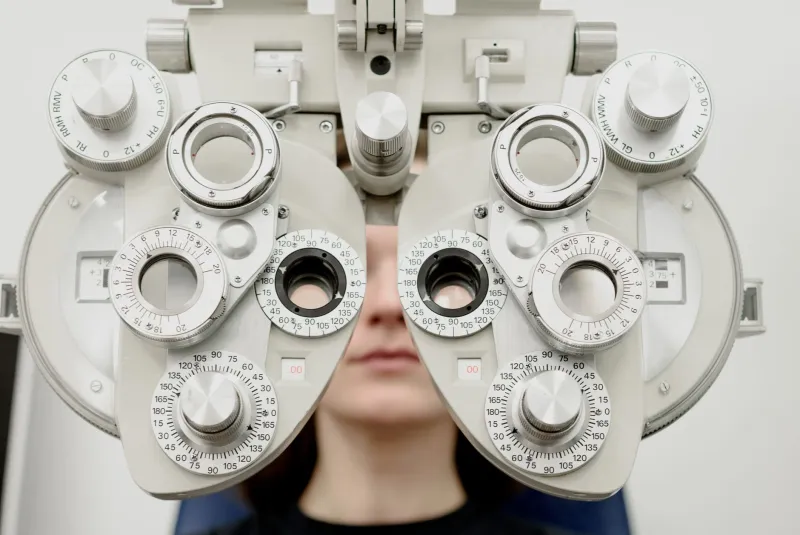
For many Americans, a visit to the optometrist ends with a familiar refrain: "Your prescription has changed a little." Sometimes the shift is barely perceptible. Other times, it is significant enough to require entirely new lenses. In either case, the question patients rarely think to ask — but absolutely should — is whether that change is expected or whether it is a signal worth investigating further.
The answer depends heavily on your age, the direction and rate of the change, and the presence of other symptoms. This article examines the most common drivers of prescription fluctuation, separates normal progression from potential warning signs, and offers guidance on how frequently prescriptions should realistically be evaluated.
What a Prescription Actually Measures
An eyeglass or contact lens prescription quantifies the refractive error of your eyes — the degree to which light entering the eye fails to focus precisely on the retina. The three primary components are sphere (nearsightedness or farsightedness), cylinder (astigmatism), and axis (the orientation of astigmatism). Changes in any of these values reflect shifts in how the eye's optical system is bending light.
These shifts can originate from changes in the cornea, the crystalline lens inside the eye, or the length of the eyeball itself. Understanding the source of a change is what distinguishes a routine update from a clinically meaningful finding.
Normal Prescription Changes by Life Stage
Childhood Through Young Adulthood: Myopia Progression
Nearsightedness (myopia) typically develops in childhood and progresses through the teenage years and into the mid-twenties. During this period, the eyeball is still elongating, and annual prescription increases are common and expected. In the United States, myopia prevalence has increased substantially over recent decades, and many pediatric patients require new prescriptions every twelve months.
For children and adolescents, consistent progression is normal — but rapid acceleration, particularly in younger children, may warrant discussion of myopia management strategies such as orthokeratology, low-dose atropine, or specially designed contact lenses. These are not merely cosmetic interventions; slowing myopia progression in childhood reduces the lifetime risk of serious complications including retinal detachment and myopic maculopathy.
The Forties and Beyond: Presbyopia
For most adults, the most predictable prescription change arrives around age 40 in the form of presbyopia — the gradual hardening of the crystalline lens that reduces its ability to flex and focus on near objects. Reading glasses, progressive lenses, or bifocals become necessary, and the prescription for near vision typically continues to shift through the mid-fifties before stabilizing.
This is not a disease process; it is a universal consequence of aging. However, its onset can be accelerated or complicated by certain medications, including some antihistamines, antidepressants, and diuretics, which affect the ciliary muscle's ability to accommodate.
Midlife Prescription Fluctuations
Adults in their thirties and forties who are not yet experiencing presbyopia but notice frequent prescription changes should pay closer attention. Modest, gradual shifts in this age group may still be within normal range, but the pace and pattern matter. Changes that occur more frequently than every one to two years, or that involve significant increases in nearsightedness after the mid-twenties, deserve a more thorough investigation.
When Prescription Changes Become Red Flags
Diabetes and Blood Sugar Fluctuations
One of the most clinically significant causes of rapidly shifting prescriptions in adults is uncontrolled blood glucose. Elevated blood sugar causes the crystalline lens to absorb fluid, temporarily altering its refractive power. Patients with undiagnosed or poorly managed type 2 diabetes frequently report that their glasses suddenly stop working — sometimes becoming dramatically more or less effective within weeks.
If your prescription appears to change significantly over a short period and you have risk factors for diabetes (family history, excess weight, sedentary lifestyle), requesting a blood glucose screening from your primary care physician is a reasonable and potentially life-saving step.
Keratoconus
Keratoconus is a progressive condition in which the cornea gradually thins and assumes a cone-like shape, distorting vision in ways that standard corrective lenses cannot fully compensate. It typically presents in adolescence or early adulthood and is often initially mistaken for ordinary myopia or astigmatism progression.
A key distinguishing feature is that prescription changes in keratoconus tend to be irregular and involve increasing astigmatism that does not correct cleanly to a sharp endpoint during refraction. Patients may describe ghost images, halos, or the sense that no lens prescription ever feels quite right. Corneal topography — a mapping of the corneal surface — can identify keratoconus before it advances to the point of requiring specialty contact lenses or surgical intervention.
Cataracts
The gradual clouding of the crystalline lens that defines cataract formation can cause a phenomenon known as "myopic shift" — a temporary increase in nearsightedness that may actually allow some patients to read without glasses for the first time in years. This is sometimes called "second sight," and while it may seem like an improvement, it is actually a sign of advancing lens opacity. Left unaddressed, cataracts will eventually significantly impair vision and require surgical removal.
Glaucoma and Optic Nerve Changes
While glaucoma does not directly alter refractive prescription, it can cause subtle changes in how patients perceive contrast and peripheral detail that may lead them to feel their prescription is no longer adequate. Any unexplained visual dissatisfaction — particularly in patients over 40 or with a family history of glaucoma — warrants intraocular pressure measurement and optic nerve assessment.
Thyroid Eye Disease
Thyroid disorders, particularly Graves' disease, can cause changes in the muscles and tissues surrounding the eye, altering its position and occasionally its refractive state. Patients with known thyroid conditions who notice prescription changes alongside eye protrusion, lid retraction, or double vision should seek prompt evaluation from both their endocrinologist and an eye care professional.
How Often Should Your Prescription Change?
As a general benchmark, most healthy adults with stable refractive errors should expect meaningful prescription changes no more frequently than every one to two years. Annual comprehensive eye exams remain the standard recommendation for adults, not because a prescription change is expected every year, but because the exam itself provides an opportunity to detect conditions that have nothing to do with refractive error.
Children in active myopia progression may legitimately require updates every six to twelve months. Adults over 60 should also expect more frequent adjustments as lens and retinal changes accumulate.
What to Ask at Your Next Eye Exam
If your prescription has changed noticeably since your last visit, consider asking your optometrist the following:
- Is this change consistent with normal progression for my age and history?
- Is the change affecting both eyes equally, or is one eye changing faster?
- Does the pattern of change suggest any need for additional testing, such as corneal topography or imaging?
- Are there lifestyle or health factors that could be contributing?
A prescription change is often nothing more than the natural evolution of your visual system. But it is also a data point — and in the hands of a skilled clinician, it can sometimes be the first clue to something that deserves much closer attention.